A Different Way Back to Faith: Chaplaincy in Hospice Care
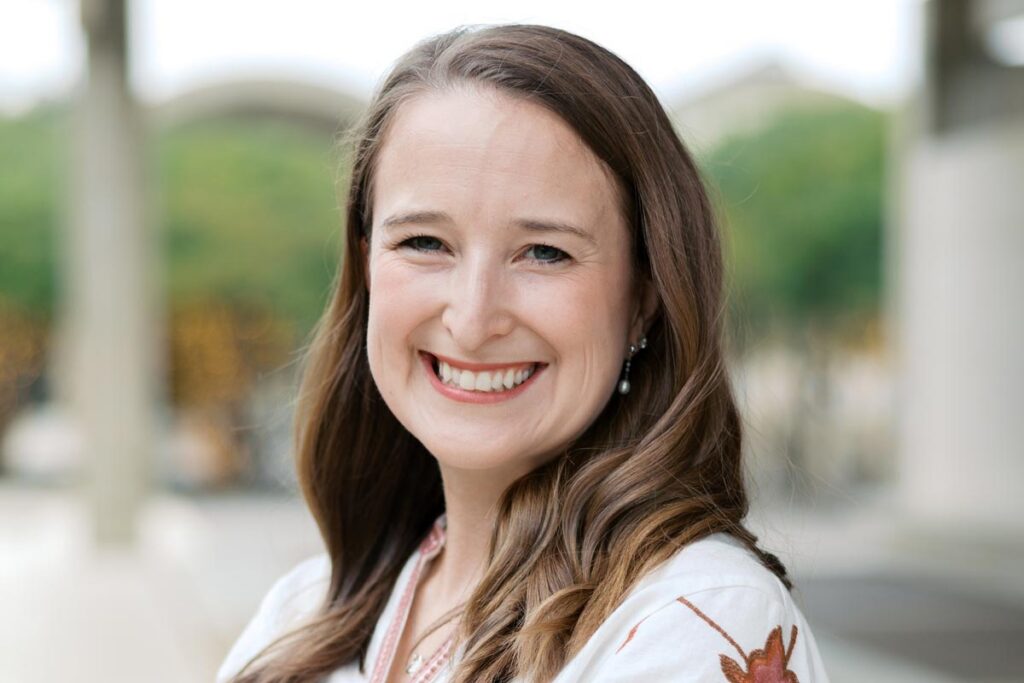
LSTC alum Kristin Klade on hospice care and the people who have no pastor to call
When The Rev. Kristin Klade MDiv ’15 visits a hospice patient in Fort Worth, Texas, she sometimes encounters someone who has never met (or even heard of) a Lutheran. Many of her patients are Southern Baptist or Roman Catholic. A woman arriving as their chaplain may be unexpected, too.
Klade welcomes the opening that unfamiliarity can create. Someone who does not know what to expect from her has a chance to tell her what they need.
“It is a gift that I can enter those spaces with fewer pretenses,” she said.
Among the people Klade serves are those who believe in God but no longer belong to a church. Some have been hurt by a religious institution. Others have lost confidence in it. They may have no pastor or priest to call when illness brings questions they cannot put off.
“I feel I am sharing the Gospel through deep listening, witnessing, and validating pain and heartache,” she said.
Her understanding of what hospice can offer began with her grandmother Jeanne, who died of liver cancer when Klade was 19. Her grandfather Joel, a physician, had pursued a cure. When he accepted hospice, Jeanne was able to die at home, in her own bed, with him beside her.
Jeanne had been Klade’s primary connection to Lutheranism. After her death, Klade wanted to honor her memory. Remembering how much hospice had helped her grandfather, she volunteered as a friendly visitor with a company in her college town.
She was majoring in psychology and considering religious studies. She loved theology without necessarily picturing herself as a pastor or preacher. Meeting the hospice chaplain helped her recognize a vocation. Her professional work would take her into perinatal bereavement care in the Chicago suburbs and a children’s hospital in Fort Worth before she returned to hospice.
As a board-certified chaplain, Klade approaches spiritual care without an agenda for what a patient should believe. Her interest in religious differences began as a Lutheran child attending Catholic school and developed through an interfaith emphasis at LSTC. She keeps connections with religious leaders around Fort Worth so patients can receive care from their own communities if they wish.
Knowing a tradition, however, is only part of knowing a person. Klade considers patients the experts on how they understand their beliefs and apply them to their lives.
Some of her most meaningful work takes place when those beliefs are in question. A terminal diagnosis can expose the limits of a theology that has treated faith as a transaction or promised an uncomplicated relationship between belief and well-being. Klade makes room for the anger and hurt that follow.
“Building a relationship with them and simply listening and making space for them to process their feelings, be it anger or any other feeling, is more powerful than most folks realize,” she said.
Sometimes that relationship allows her to offer another way of thinking about God. For a patient’s relatives, the conversation may affect how they understand faith after the death.
Klade credits pastoral care and interfaith classes, along with LSTC’s Center for Christian-Muslim Engagement for Peace and Justice, with helping her become a more curious and attentive chaplain. Other parts of her education enter a visit more directly. Songs she learned in the Gospel Choir are songs she now sings to patients, and to her children.
A classroom lesson may help her hear a difficult question. A remembered song may give her a way to respond.