Listening, Learning, and Leading in a Time of Change: A Conversation with Rev. Robert O. Smith, PhD, on Theological Education, Public Witness, and the Future of LSTC
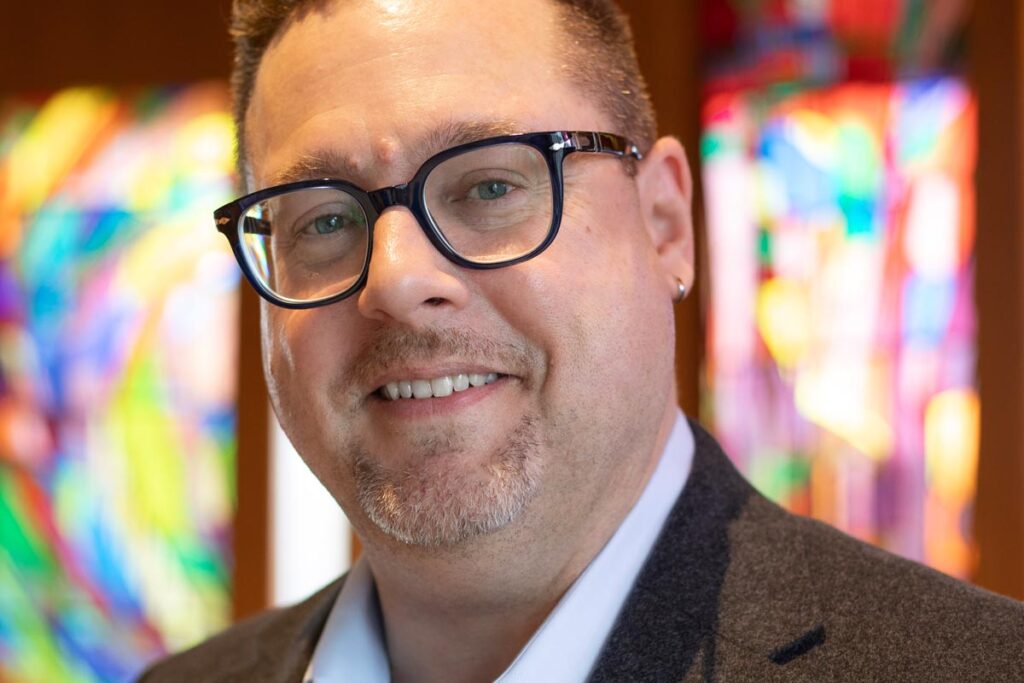
As he begins his tenure as Vice President and Dean of Academic Affairs and Associate Professor of Authentic Diversity, Justice, and Public Church in January 2026, Rev. Robert O. Smith, PhD, brings to LSTC a leadership style grounded in deep listening, historical consciousness, and hope rooted in justice. An interdisciplinary scholar, ordained ELCA minister, and citizen of the Chickasaw Nation, Smith approaches theological education as both an intellectual and incarnational practice; one shaped by lived experience, storytelling, and real-world engagement. In this conversation, he reflects on entering a community during a time of transition, supporting faculty and students amid changing educational landscapes, and guiding LSTC’s academic life with integrity, empathy, and courage. Drawing on decades of service in global mission, parish and campus ministry, and higher education, Smith articulates a vision for theological leadership that is adaptive, relational, and steadfastly committed to the flourishing of all communities.
As you begin your role at LSTC, how are you thinking about entering a community during a time of transition?
Leading through change is never a simple or easy task. All communities and all institutions are made up of people—people who have their own perspectives, analysis, and desired directions for the future. As I enter LSTC, I am conscious of the many communities to which the seminary is accountable: our layers of shared governance, our dear alumni community, and the communities to which it is most accountable, including pastors engaged in ministry with us in the urban realities of Chicago. LSTC is also an institution that, like any structure set up to meet people’s needs, will require maintenance, change, and improvement as the world changes around us. Part of my effort will be to take those perspectives into account as I work with the executive team to chart the seminary’s path toward its most faithful and effective future.
As a leader and pastor at heart, how do you hope to show up for this community as you begin listening and learning?
I delight in learning, especially in learning about people’s lives, experiences, and perspectives. As a Native person and thinker, I especially delight in storytelling—a significant tool people use to make meaning of those experiences. I plan to bring this spirit to my early work at LSTC.
That approach has been present in the research and writing my partner and I have done on the topic of critical race theory (CRT). We were blessed to spend significant time in the archives and homes of some of the founders of CRT, including time with Richard Delgado and Jean Stefancic in Seattle and in Derrick Bell’s papers at NYU. In the same way, the living community of LSTC, as well as its extensive record of experiences within the community, is an archive that can be engaged and learned from. The broader community contained in that archive—a community containing names that are well-known and other names that are not often spoken—has a story to tell, a story that brings us into our present moment.
What are your priorities as you begin this position?
My top priority is to listen and learn. While I am a quick study, I know that I am stepping into a system that has been operating for decades. So I’ll be reading the manuals and guides but also listening carefully for the system’s unwritten rules.
Listening is a key component of another top priority: building relationships. I welcome students and colleagues with an open-door policy. The same goes for everyone concerned with supporting LSTC as it charts a path toward the future. I already have some relationships with people in the LSTC ecosystem. I’m very excited to build on that base of trusting relationships so we can mutually discern and move toward our shared goals.
How will you support faculty, students, and the academic life of the seminary?
I will be as available and accessible as possible to every group of people within and concerned about the life of LSTC. As a person who will be working in both the academic and administrative functions of the seminary, I’ll be tending to just about every system and structure, ensuring they are meeting the needs of everyone involved. Continuing LSTC’s reputation of providing a supportive environment for all learners, instructors, and staff members will be one of my top priorities. I lead with an understanding that not everything will go according to plan and that we need to draw on various levels of grace (and the Eighth Commandment!) to make sure we’re doing the best we can.
In my time teaching at the University of North Texas, my students included many first-generation college students. In addition to being a Tier 1 research institution, UNT was designated as both a Minority-Serving– and Hispanic-Serving Institution (MSI/HSI). All that translated into many students who expected to have to work many times harder to achieve the same grade as more privileged students or who had to navigate being discriminated against due to perceptions of their language ability … all while caring for injured or disabled family members or working a full-time job (as I did throughout most of my higher education path).
In each of my classes, I made a point to announce, several times at the beginning of each semester, that I know life has a way of challenging our total focus on learning. With that in mind, I said to my students, please never feel the need to suffer in silence. If a challenge comes up, with work or family (or ICE raids are happening in your community) please be in touch to let me know, even if the specifics needed to remain confidential. Additionally, when I worked for Notre Dame, leading study abroad programs, realities from back home could deeply shape learners’ experiences.
That posture of openness and empathy to lived experience—you could call it incarnational—has been important for me for relations with colleagues as well, not just students. Every institution is made up of people. We might be focused on God, but the church and its seminaries are imperfect institutions made up of imperfect people. We have lives outside of our offices and classrooms; sometimes, things will happen that will take us far from how we planned to use our time. I think we all benefit from leadership that anticipates those realities as part of our lives, ensuring that we are each able to tend to each person’s many vocations. That grace can then be extended to the institution as a whole; we are a group of people seeking to discern the right path forward. We won’t always get things exactly right, but we press on toward our shared goals, knowing that it may not be reached in our lifetime.
Theological education is changing rapidly. How do you balance continuity and innovation in your leadership?
The educational landscape has changed dramatically in the wake of Covid-19 and the rise of artificial intelligence. As knowledge itself is reshaped and redefined, education and pedagogy are being transformed. We are faced with the productive challenge of maintaining our baseline principles and commitments while engaging new modalities made possible through the same technological advances that are straining society. We’re living in quite a time.
Within this broader sphere, theological education is challenged by a rapidly changing religious landscape. As most people affiliated with LSTC know, people with no affiliation are the most rapidly growing religious group in the country. While the overall percentage of Christians in the US population is shrinking, most of that decline has come within mainline denominations. Although numbers don’t tell the whole story, my read of this decline is that the form of Christian faith mainline Christians have offered to people in the US has been missing the mark.
What has contributed to this disaffiliation trend? To understand it, we need to be speaking with people who are not already in our communities. In my conversations with people from all sorts of different backgrounds, religious leadership is beset by perceptions of rampant hypocrisy, sexual and spiritual abuse, and exclusionary harm. Perhaps more than ever before, it is essential that we engage people across lines of difference … and not with the goal of merely adding them to our numbers without their meaningful input. In this world of algorithmic self-justification, connecting meaningfully with our neighbor is a countercultural act. Without it, without authentic connection with people’s lives, we are more likely fall prey to the temptation of looking after our own comfort and replicating our own interests alone.
The task before us—all of us—is to recalibrate longstanding institutions not just for the present but for the future. That task begins, first and foremost, with a combination of community-level analysis and theological reassessment. While we will need new techniques (online education modalities, for instance) we need to reassess primarily at the level of substance (biblical interpretation, confessional theology, realist assessments of social realities). In every age, theological education has been challenged by the task of finding the right modality to communicate new stories, songs, and insights about ancient wisdom. In a world of artificial intelligence and virtual reality, we offer real presence. Just as Luther harnessed the power of the Gutenberg press, today’s Lutheresque leaders must grapple with emerging technologies. As in the Sixteenth Century, the stakes could not be higher.
Alongside all this change, however, I am confident in basic continuities, including the reality of God’s love for humanity incarnate in the person of Jesus Christ and the necessity of caring human-to-human relationships, the ministry of reconciliation that has been entrusted to us. Knowing that while history may not repeat itself, but that it has a tendency to rhyme, we must look back so we can effectively see the path ahead of us. Theological education today is happening within a resurgent moment for sexism, racism, and fascism. Our tradition already possesses the answers for how we can respond to the emerging techno-feudal world where fascist politicians and their oligarchic funders craft theological narratives to justify their plunder. In a time when immigrants and refugees are maligned and criminalized, it is time for us to learn again from the working class, immigrant founders of our denomination.
Our world—the context of our ministry—is changing rapidly. Not much seems to be going in a good direction. I am confident, however, that we are called to be co-creators with God for a world which promotes the flourishing of all human communities. Even if I’m not always optimistic, I am filled with hope. That, I think, is the primary ingredient for adaptive, effective, and transformative theological education.
How do you see academic leadership supporting LSTC’s commitment to being a public church and a place of belonging?
Seminaries have a unique position within religious education. Distinct from Divinity Schools and departments of religious studies, we are committed to both our denominational/confessional identity and to praxis arising from real-world engagement. Seminaries, at their best, are the space where theoretical exploration encounters and is modified by the needs of human communities. To that end, I will encourage our faculty toward far-reaching interdisciplinary engagement. LSTC should be deeply interdisciplinary, drawing benefits from our excellent, multifaceted faculty, the broader learning community in Hyde Park, in Chicago, and beyond.
Positioned in Chicago, LSTC can be a leader in emphasizing the gifts of many different communities as the ELCA moves into a new future. The seminary should draw from and enhance the gifts of Black, Latiné, Afro-Caribbean, Indigenous, and ethnic white communities who have long made Chicago home. As we lean further into intersectional possibilities, LSTC should become known as a center for Disability-focused ministry, Queer-affirming ministry, among other possibilities. Again, however, these should not be theoretical commitments alone. People within the LSTC family who find themselves in various categories should always find the seminary to be a place of welcome and affirmation.
Although God’s love is unchanging, we live in a world experiencing massive change. As trust in institutions erodes, we need a renewed ecclesiology, which will then produce a new vision for ministry. We also need to strengthen our collective capacity to address both technological and social changes. Adaptive artificial intelligence and machine learning has opened new vistas of ethical consideration. At the same time, we are seeing new forms of state and national security theology, trends that theologians and religious leaders must be equipped to resist. A new world is emerging; we must equip theologically informed leaders who can help shape what will emerge.
Lutherans have a track record of leading well in times of epochal change. Martin Luther and Dietrich Bonhoeffer both led resistance movements that included seminaries. Dorothee Sölle’s rejection of “Christofascism” (she coined the term) is, for instance, an effective beginning point for rejecting the white supremacist, male chauvinist theology of the Heritage Foundation. Beyond Lutheran thought, LSTC must continue to emphasize liberationist and decolonial theological movements, including Womanist, Mujerista, and Minjung theologies alongside the global Kairos movement exemplified in South African and Palestinian expressions.
Nothing I am saying here is new for LSTC. Indeed, LSTC already has the right answers to the present moment’s pressing questions. The “Public Church” concept is strongly represented in our curriculum. The seminary’s commitment to Authentic Diversity—including interreligious diversity and the tenets of intersectionality and anti-essentialism—are manifested in our Centers. While we can’t claim to have all the right answers, LSTC’s strong academic foundation, laid by generations of excellent faculty and administrative leadership, helps us as we equip leaders to accompany congregations and communities as they navigate the difficult challenges of the present and future.
What would you like the LSTC community to know about you as you begin this work?
I am thrilled to be joining the LSTC family. I lived in Hyde Park in the early 2000s when I served as the Lutheran campus pastor at the University of Chicago. I was on staff at Augustana Lutheran Church, across 55th Street from LSTC’s prior location. I’m thrilled to return to the neighborhood and to renew my relationship with the South Conference of the Metro Chicago Synod.
I’m originally from Oklahoma. I am a proud citizen of the Chickasaw Nation, a people ethnically cleansed out of our Mississippi homelands after the Indian Removal Act of 1830. There aren’t many Lutherans in Oklahoma. I was raised in an Assemblies of God megachurch in Oklahoma City. During my undergraduate studies, I was confirmed as a Lutheran at Salem Lutheran Church in Stillwater, Oklahoma. I went on to earn the MDiv and an MA in Islamic Studies at Luther Seminary in Minnesota (home of the other Stillwater). I completed my internship with Pr. Larry Meyer at the Lutheran Student Center in Lincoln, Nebraska.
One asset I bring to this role is service in many levels of ELCA leadership. During my PhD coursework at Baylor University, I was ordained at an open-country rural parish, St. John Lutheran in Coryell City, Texas. I then transitioned to campus ministry at Augustana. After that, I was hired to work in the Global Mission Unit in the Churchwide Offices. There, I was able to volunteer in many roles with the Lutheran World Federation and the World Council of Churches; I worked most closely with Palestinian Christian theologians connected with the Kairos movement and other forms of liberation and contextual theology. After a few years in Jerusalem teaching and administering University of Notre Dame programs, I returned to Texas, where I served as an Associate to Bishop Erik Gronberg in the Northern Texas–Northern Louisiana (NT-NL) Synod. I returned to academic teaching at the University of North Texas under NT-NL synodical call. I hope that my experiences in rural, urban, Indigenous, international, interreligious, and ecumenical ministry are helpful to learners seeking calls in various contexts.
Academically, my work has focused on a variety of topics with the overlapping areas of religion, politics, race, and Indigeneity. A lot of my published work has focused on Christian Zionism, primarily as a way of explaining U.S. Chrisitan attitudes to Palestinian friends. That topic has led me into sustained reflections on the history of supersessionist theological and political systems as well as recent efforts to define antisemitism.
Over the past few years, I have been co-researching and -writing a series of books on the deep history of critical race theory (CRT) with my partner, Aja Y. Martinez, a professor of Latina/Latino Studies at the University of Illinois Urbana-Champaign. Our work has demonstrated the organic continuity between CRT and the long civil rights movement as well as CRT’s organic connections to the foundations of Alice Walker’s womanist thought and the radical pedagogies of Paulo Freire, the Freedom Schools, and Head Start. We have grown convinced that, due to the movement’s own inclusion of theological analysis, CRT is a vital tool for confronting and correcting recent ethno-fascist trends and their supporting theologies. Most recently, I have been working with a feisty group of Chickasaw and Choctaw scholars toward the goal of full Freedmen inclusion in our citizenship structures. These intersectional journeys have been challenging and profoundly rewarding.
I look forward to talking with folks about any of the topics I have raised in this conversation. There’s far more to discuss! If something I’ve said here piques your interest, I look forward to you being in touch as we together seek the best for LSTC and for the church we are called to serve for the sake of God’s love for the entire world.