Making Room to Talk About Dying: Chaplaincy and the Next Chapter
LSTC alum Lora Salley on caring for patients and the people beside them
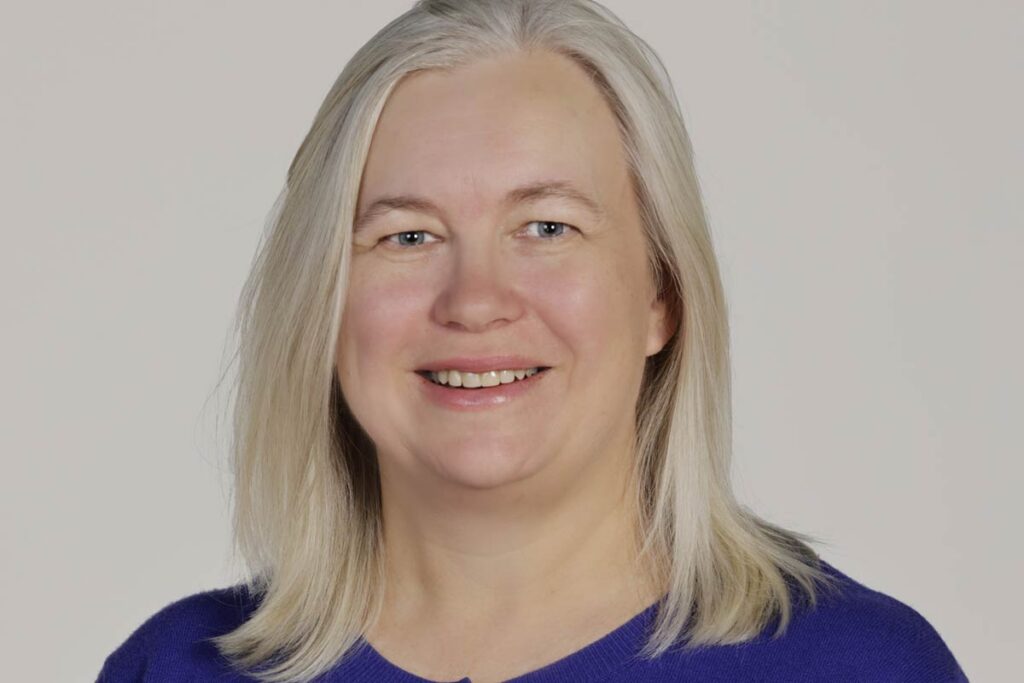
The patient was ready to talk about death. He was in his late 90s, his wife had passed several years earlier, and his health had declined quickly. A son had moved in to care for him. During a visit with Deacon Lora Salley MAM ’20, he spoke about his life, his faith and the independence he had lost.
He said he was ready to die.
For Salley, such conversations are part of what hospice chaplaincy makes possible. Patients may welcome an opportunity to speak about something their families find difficult to discuss. What they say can help relatives understand their wishes and make decisions with less uncertainty.
“I wish more people understood how talking about your wishes for the end of your life is a gift to your loved ones,” she said.
A couple of weeks after that first visit, the man’s son asked Salley to return. His father was now actively transitioning. Salley sat with them as the son, tearful, shared favorite memories of his dad. They prayed together. She later learned that the man passed away that evening.
“One of the things that I find important is being able to accompany both the patient and the family so that they may not feel so alone,” she said.
Her visits take place where patients live, at home or in a nursing facility. Care might include listening to memories, playing music or contacting a priest or pastor. A family may need help understanding signs that someone is nearing death. Sometimes relatives need reassurance about the care they are providing.
These practical concerns belong in Salley’s account of spiritual care. A conversation about feelings can take place alongside questions about what is happening to a loved one. Supporting the patient also means attending to the people who are trying to help.
Salley came to LSTC with a background in social work. During her first year, a unit of clinical pastoral education at Advocate Illinois Masonic Medical Center introduced her to healthcare chaplaincy. The hospital gave her a setting in which to use her counseling skills and compassion while drawing on her seminary studies.
She found satisfaction in supporting patients, families and hospital staff through difficult experiences, including death and dying. She also saw how a person’s beliefs could become a source of help during illness.
“I learned how helping people connect to their values and beliefs can bring a sense of hope, especially important at times of pain and suffering,” she said.
Her Master of Arts in Ministry education supplied theological understanding and preparation in spiritual and pastoral care. Clinical pastoral education remained central to that formation, including four units through a chaplain residency.
For Salley, hospice work is an expression of her vocation as a deacon, called to Word and Service. She understands that call as serving others in response to God’s love, including people experiencing the distress of illness and loss. The visit with the father and son shows how that service can change as a patient’s condition changes. On the first visit, the man could speak about his own life and what he hoped for. On the second, his son shared memories while Salley sat with them. Both conversations had a place in their care, and on the journey to the other side.