With Our People: Pastor Megan Tee, MDiv ’17, on Her Ministry in Japan
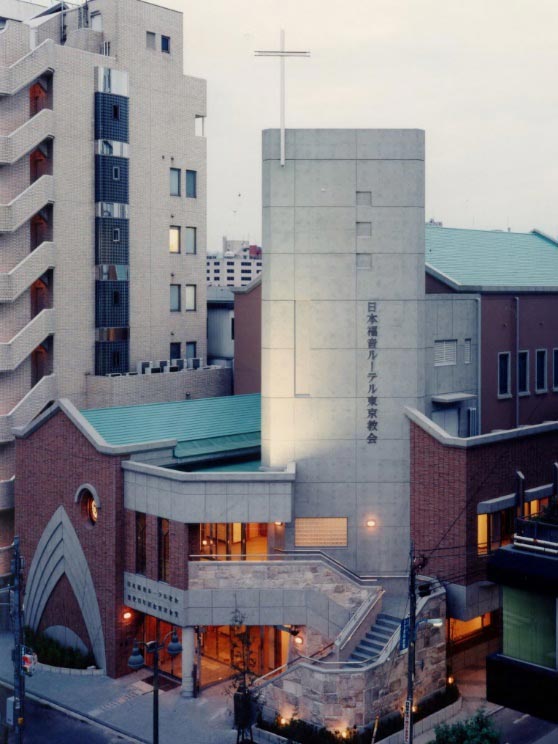
At Tokyo Lutheran Church, Sunday mornings unfold in more than one language.
At 10 a.m., the congregation gathers for worship in English. An hour later, another service begins in Japanese. Several times each year, the worship services come together for joint bilingual worship, with members providing simultaneous translation. Sunday School and Youth Group bring English and Japanese speaking children together each month. And among the congregation’s members, who come from Japan and more than 13 other countries, at least 43 languages are spoken.
For Pastor Megan Tee, MDiv ’17, the diversity of the community is remarkable. But nearly a decade after graduating with her MDiv from LSTC, she has also discovered that faithful ministry across cultures begins with something deeply familiar: being present with people.
“People are people, no matter what country or culture we are from,” Tee said. “All the elements of pastoral ministry that were present in my American church context are present in this one too—grief, joy, family conflict, witness, anger, shame, spiritual growth, doubt, passion.”
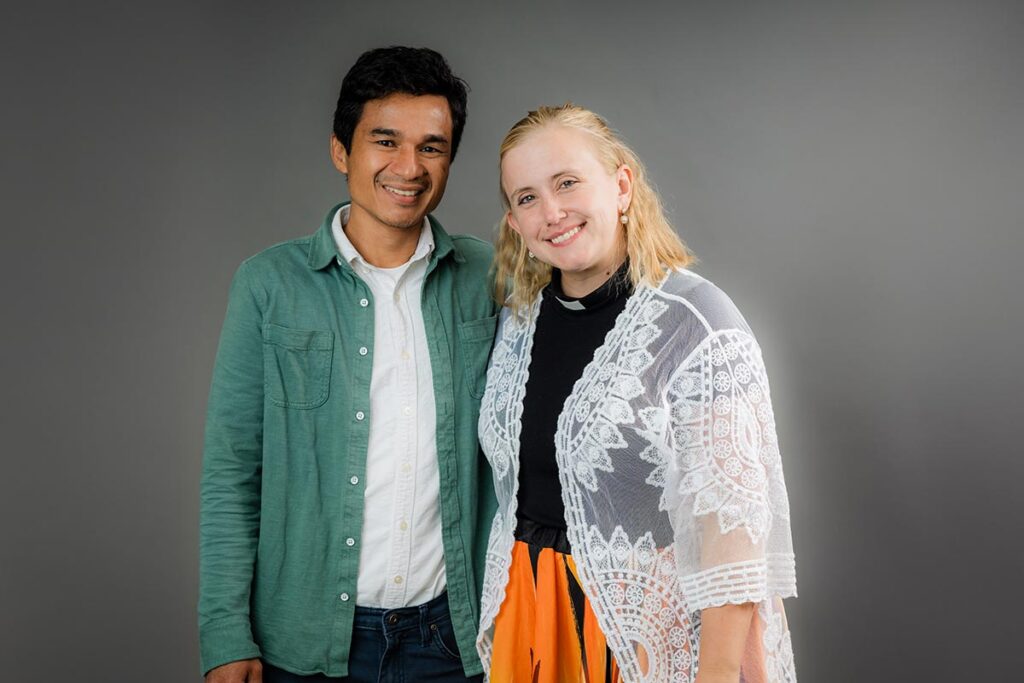
Tee and her husband, Tee Sieng, have served at Tokyo Lutheran Church since October 2025 through the ELCA’s Global Mission Service and Justice Unit. Megan serves as pastor to the church’s English-speaking worshiping community, while Sieng, who is originally from Cambodia, serves as a Missionary Associate focused on community outreach, technology, and social justice ministry.
The call brought them back to a part of the world already important to their story. The couple met while studying abroad at the Lutheran Theological Seminary in Hong Kong and had long wondered whether the Spirit might eventually lead them to ministry outside the United States.
For Megan, who first felt called to pastoral ministry at 14, the opportunity in Tokyo seemed to provide an answer.
“It felt a bit like the Spirit tapping us on the shoulder,” she recalled.
Formed for Prophetic Witness
Only after leaving LSTC did Tee fully recognize how deeply her theological education had shaped her understanding of ministry.
“I did not realize until I graduated how much LSTC had formed me into a preacher with a hunger for prophetic witness,” she said.
For Tee, prophetic witness is not abstract. It grows from accompaniment: celebrating with people, witnessing their pain and walking beside them in grief. Worship nourishes a community through the Gospel, prayer, confession and the Eucharist, and then sends that community outward to love and advocate for its neighbors, particularly those who are marginalized and vulnerable.
That understanding reflects lessons Tee carries from professors and mentors who helped shape her at LSTC.
She remembers Dr. Kadi Billman, her advisor, working with extraordinary care to help her navigate rigorous theological study alongside the demands of the immigration process she and Sieng were facing. A course with the Rev. Dr. Linda Thomas, “Black Lives Matter,” transformed how Tee approaches preaching and pastoral care. Dr. Peter Vethanayagamony encouraged her to bring the full breadth of her interests into her formation, helping her design an independent study on Cambodian Christianity that remains one of her proudest academic accomplishments.
Those experiences taught her that theological formation could be both intellectually rigorous and profoundly relational—a lesson that now informs her leadership in one of the world’s largest cities.
Curiosity, Humility and Grace
Cross-cultural ministry has made Tee especially attentive to the posture leaders bring to their communities.
“Curiosity, humility, and grace are the most crucial ministry tools I reach for daily,” she said.
With members shaped by many cultures, languages and life experiences—and while still learning Japanese herself—Tee knows she cannot fully understand every dynamic within her congregation. But complete understanding, she believes, is less important than a willingness to listen and learn.
“This is not my church,” she said. “This is Christ’s church. I am never going to be perfect. But I can always do better when I know better.”
That spirit of humility is accompanied by a commitment to justice and community engagement.
Sieng has spent much of the couple’s first year building relationships with churches, community leaders and social service organizations throughout Tokyo. Together, they are learning more about housing insecurity and available social services, while Megan hopes to expand connections to mental health resources for people experiencing anxiety, depression and grief.
Twice each month, Tokyo Lutheran hosts a Community Café run by Church World Service, bringing together people ranging from international students to elders needing memory care. Another small group from the congregation visits areas where people experiencing housing insecurity gather, bringing clothing, bath tokens, hot tea and homemade cookies.
The purpose, Tee emphasized, extends beyond distributing material resources. It is about relationships.
The Gospel in a Lonely, Busy City
Christian ministry occupies an unusual place in contemporary Japan, where Christians comprise a small minority of the population. For newcomers without extensive experience of Christianity, faith formation—from catechism to Bible study—can be especially important.
Yet Tee sees another challenge that transcends national borders: people are extraordinarily busy.
Long working hours and intense academic expectations can make finding time for worship, Bible study and fellowship difficult. At the same time, automation can make daily life surprisingly solitary; restaurants, trains and stores can all be navigated with little human interaction.
Against that backdrop, Tee believes the Gospel’s message of unconditional love, grace and compassion carries particular power.
People need to know “the truth that they are loved beyond imagination and they are never alone,” she said, regardless of their “resume, test scores, or number in the bank account.”
Creating spaces of belonging therefore becomes part of the church’s witness. Bible studies, book discussions, holiday parties, lunches after worship and children’s programs all contribute to a community in which people can know and care for one another.
And it is there—in people themselves—that Tee finds her greatest hope for the global church.
She has watched lay members step into preaching and worship leadership with gifts she describes as extraordinary. Their ministry has reminded her that the church of the future may not look exactly like the church of the past.
“Congregational ministry might look drastically different in the future,” Tee said, “but it might also be more beautiful, faithful, and centered on the love and grace of Christ than we could imagine.”
It is a lesson she would pass along to today’s LSTC students: amid changing technologies, institutions and models of ministry, do not lose sight of the people in front of you.
“The heart of ministry—the experiences that have taken my breath away and made me feel like I am bearing witness to a piece of the kingdom of heaven—have always been when I am with my people,” Tee said.
At coffee hour. In Bible study. In hospital rooms and at gravesides. At the altar, around kitchen tables and in coffee shops.
For Tee, ministry begins there. And whether in Chicago or Tokyo, the work of forming courageous Christian leaders for a changing church remains rooted in the same thing: learning to listen, to accompany, to serve, and to love our neighbors well.