Adam Groenke: Presence in the Hardest Places
CPE Site: Rush University Medical Center (Neonatal Intensive Care, Labor and Delivery, and General Medicine)
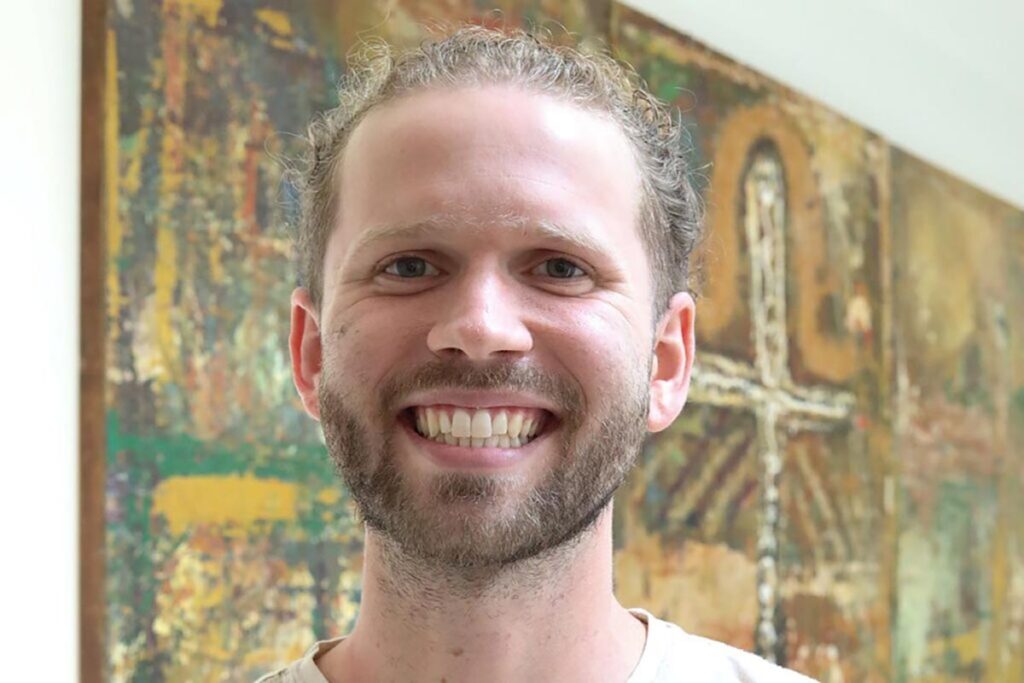
For his Clinical Pastoral Education, MDiv student Adam Groenke served at Rush University Medical Center, where his primary assignment included the Neonatal Intensive Care Unit, Labor and Delivery, and a General Medicine floor. He describes the program as “really good and learner-focused,” emphasizing how formative and supportive it was for both professional and spiritual growth.
One of Groenke’s most meaningful memories came during the cohort’s “Story of Loss” day, when students and educators alike shared deeply personal experiences of grief. “It was a very heavy day,” he reflects, “but we grew together as a learning community, strengthening our bonds and learning how to support each other and those we provided spiritual care to in the hospital.”
The most challenging—and ultimately transformative—moment of his summer came in the NICU, when Groenke was called to be with a Hindu family who had just lost their child. “In that moment, I grew as a ministerial leader by embodying the powerful ministry of presence,” he said. “It was the ministry of arriving to the most silent and somber room simply to accompany that family in very hard moments.”
CPE, Groenke says, reshaped both his sense of leadership and his understanding of care. “It instilled in me a strong sense of responsibility for others’ wellbeing,” he explains. “I encountered so many different people with so many different care needs, and I learned there are many ways to care for people.”
He also credits LSTC with giving him a strong foundation before stepping into the hospital context. “LSTC is a very tight-knit and supportive community,” he shares. “Ministerial Leadership and Pastoral Care and the Life Cycle both prepared me really well for the challenges of CPE.”
By the end of the unit, Groenke found himself surprised by how natural chaplaincy felt. “I was surprised how comfortable I became walking into a room and offering spiritual care to a stranger,” he said. “I was equally surprised by the affinity for chaplaincy I developed by the end.”
“The most challenging part of CPE was seeing so much suffering and death,” he says. “It was also the most rewarding, though, because I learned and grew so much from those moments. CPE was one of the hardest few months of my life mentally, physically, and emotionally…but it was so enriching. I highly recommend it for anyone who wants to improve their skills in accompanying people through all walks of life.” For those about to begin their own CPE journey, Groenke offers grounded advice: “It’s okay to be afraid or nervous—it’s okay to feel whatever you feel. Remember that you have educators and a cohort to rely on for support. And make sure to practice lots of self-care, on and off the clock.”