Faith formation meets flexibility
In her sixties, a former tech professional finds a new calling — and a new kind of seminary
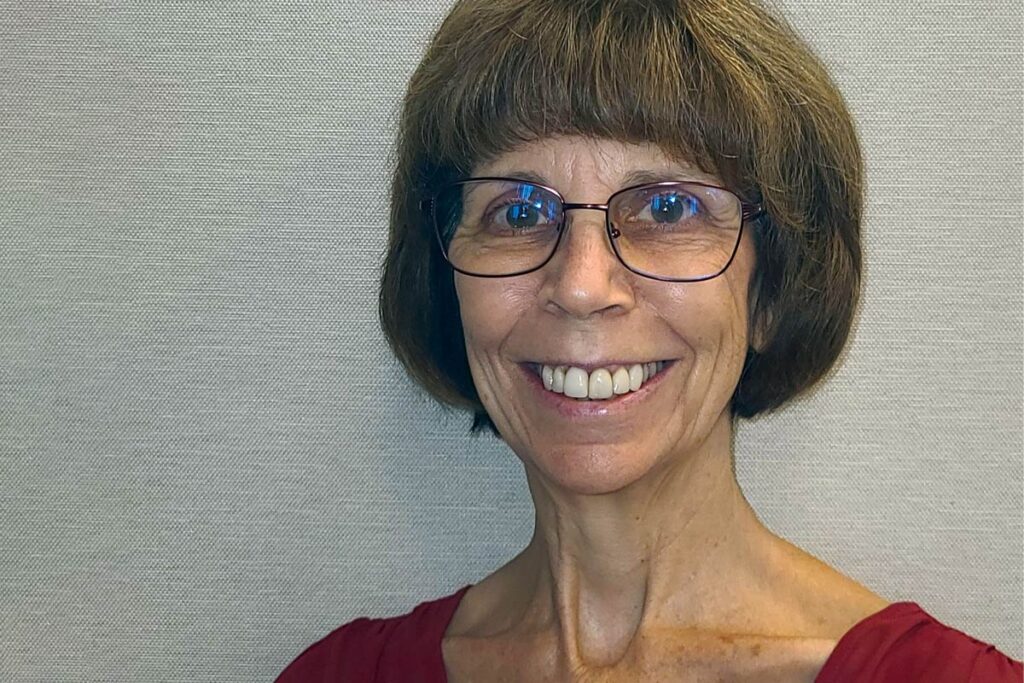
When Pamela Blythe clicked “enroll” on an online theology module earlier this summer, she wasn’t just signing up for a course. She was, in her words, “cracking open a door that had been closed for decades.”
Blythe spent her early career as a teacher and then moved into the corporate world, mastering project management systems and online learning platforms at companies like Qualcomm. But behind her steady professional climb, a quieter longing had lingered — one that began in her teens when she first felt a tug toward ministry in a small Baptist church in California.
“In those days,” she recalled, “a woman who sensed a ministerial calling either became a missionary, a pastor’s wife, or settled for something else.”
“For me, teaching was a really good ‘something else’ — until it wasn’t.”
After decades designing training programs and managing technology teams, Blythe retired and moved with her spouse to El Dorado Hills, California. Her church, St. Stephen’s Lutheran Church, was struggling to find supply pastors. “Watching our council president scramble each week made me wonder,” she said. “Was there a way for people like me — older, experienced, ready — to serve without going back to seminary full-time?”
That question led her to Project Starling, a new digital learning platform created by the Lutheran School of Theology at Chicago to expand access to theological education. Starling’s short, asynchronous modules are designed for learners who can’t easily uproot their lives for residential study — bi-vocational ministers, retirees, or second-career seekers like Blythe.
I’m very comfortable with online learning. I used to design courses myself. Starling removes the barrier of time and space — and for someone in their sixties, that’s no small gift.
– Pamela Blythe, Project Starling student
She discovered the program through another second-career pastor, the Rev. Dianne Wendt, and a conversation with synod staff who mentioned that the Southwestern California Synod was exploring a Synod Authorized Ministry (SAM) pathway. When Blythe heard that Starling’s pilot courses were online, flexible, and designed for self-paced learners, she was intrigued.
“I’m very comfortable with online learning,” she said. “I used to design courses myself. Starling removes the barrier of time and space — and for someone in their sixties, that’s no small gift.”
Still, she knew she was stepping into something untested. Starling’s early modules were in pilot phase, and participants were encouraged to give feedback. Blythe quickly found herself wearing two hats — that of student and system-tester.
“There are glitches and hiccups in user testing, but I get to use my background as a designer and administrator to help improve the experience for future learners. It feels collaborative — like we’re building this together.”
What she didn’t expect was how deeply the coursework would reach into her sense of self. A module in the Spiritual Formations resource on Spiritual Pathways stopped her short.
“It explored the four pathways — Mind, Heart, Mysticism, and Activism,” she said. “I realized mysticism isn’t the sum total of spirituality. Understanding that Mind and Activism are also spiritual helped me stop worrying that I wasn’t ‘spiritual enough.’ It was liberating.”
The journey hasn’t been without its challenges. The self-paced model requires discipline, and the solitude of online learning sometimes weighs on her.
“The total absence of human interaction is harder than you think,” she admitted. “If you’re extroverted, you’ll miss that energy.”
Still, she finds grace in the rhythm: the freedom to pause when life intervenes, the permission to move at her own pace, and the invitation to reflect rather than memorize.
For Blythe, Project Starling represents something larger than a new educational venture — it’s a bridge between the traditional seminary and a digital future where faith formation meets flexibility.
“Some of these modules have challenged my assumptions,” she said. “They’ve made me realize that ministry may demand more than I anticipated. But so far, that hasn’t scared me off.”
Asked what she’d tell others considering Starling, Blythe offered the same grounded advice that once guided her in tech:
“Be open. Be curious. Manage your time. And enjoy the journey.”