LSTC Faculty Launch Oral History Project Documenting the Extraordinary Lutheran Ministries Historic Roster
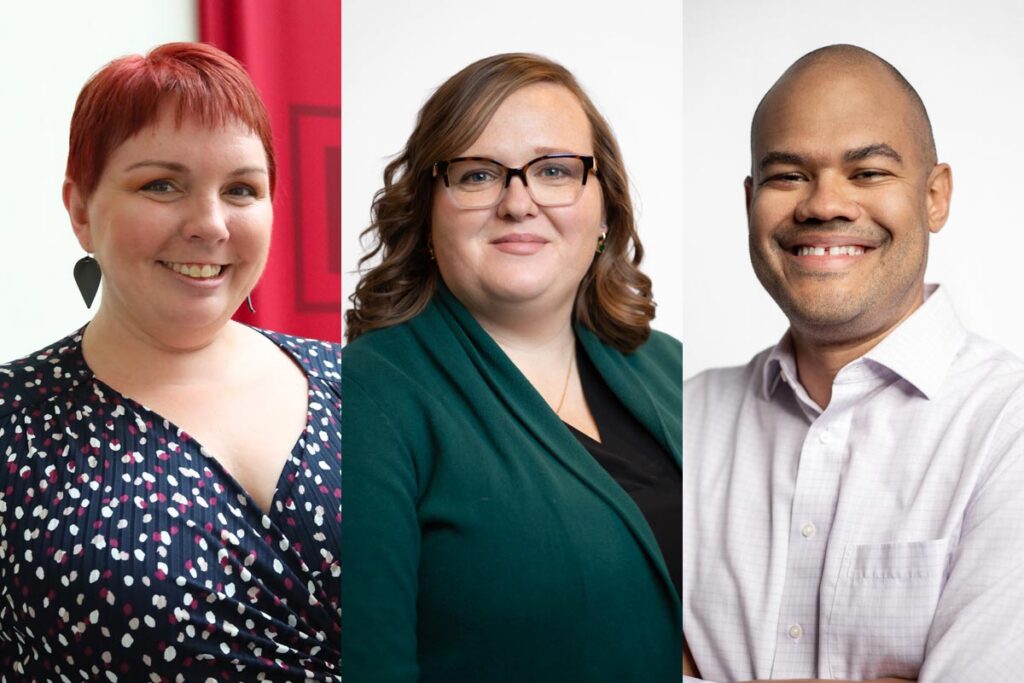
Three professors from the Lutheran School of Theology at Chicago are launching an oral history project that will document and preserve the stories of LGBTQIA+ leaders who helped transform the Evangelical Lutheran Church in America. The project is led by Dr. Karri Alldredge, Assistant Professor of New Testament; Rev. Dr. Brooke Petersen, John H. Tietjen Chair of Pastoral Ministry, Associate Professor of Pastoral Care, Director of MDiv, MA, and MAM Programs, and Director of ELCA Candidacy at LSTC; and Dr. Marvin E. Wickware Jr., Associate Professor of Church and Society and Ethics. Together, they are developing a publicly available multimedia archive centered on the oral histories of members of the ELM Historic Roster, as well as those individuals and communities who supported their movement.
The 2009 decision by the Evangelical Lutheran Church in America to allow the ordination of Lutherans in “publicly accountable, lifelong, monogamous same-sex relationships” followed decades of exclusion in the ELCA and its predecessor churches. Throughout those decades, a broad movement worked to challenge that exclusion. Organizations such as Lutherans Concerned/North America, Lutherans Lesbian & Gay Ministries, Extraordinary Lutheran Ministries, the Ecumenical Catholic Communion, and Reconciling Works joined with congregations and individual advocates who believed the church’s ministry should reflect the full diversity of God’s people.
Among the most visible witnesses in that movement were those recorded on the ELM Historic Roster. These were individuals who had been removed from the official roster of Lutheran clergy because they were not permitted to serve openly due to their sexual orientation or gender identity, as well as candidates who were denied ordination because of their sexual identity. Eighteen clergy were ordained through what became known as “extraordinary ordination,” a courageous and rigorous process through which their call to ministry was affirmed despite institutional barriers. While the 2009 Churchwide Assembly marked a watershed moment, the movement for LGBTQIA+ inclusion in the ELCA did not end there. It has continued through the leadership of clergy, laypeople, and organizations committed to the flourishing of LGBTQIA+ people in the life of the church.
In recent years, this project’s leaders have recognized that awareness of this history has begun to fade. The purpose of the oral history project is to preserve the voices of those whose faith and conviction sustained the movement and to ensure that the history of their witness remains accessible to future generations.
During the first three years of the project, the team will record individual and group video interviews with members of the Historic ELM Roster and others who were closely involved in the events surrounding the 2009 ELCA Churchwide Assembly. These interviews will form the foundation of a publicly accessible digital archive that will include video interviews alongside relevant historical materials. The project will also produce study resources designed for adult Christian education settings so that congregations and communities can engage more deeply with this history.
The project is being developed in collaboration with several partners, including the LSTC Queer Symposium, Extraordinary Lutheran Ministries, ReconcilingWorks, and the LGBTQ Religious Archives Network. Together, these partners bring expertise in theological education, LGBTQIA+ ministry, and the preservation of religious history.
Early support for the work has been provided by two grants. The E. Rhodes and Leona B. Carpenter Foundation has awarded $25,000 to bring storytellers to the LSTC Queer Symposium taking place April 20–22, 2026. The Lyn C. and Stewart W. Herman Jr. Fund for Innovation in Theological Education has contributed $23,500 to support the educational aims of the project. By documenting these histories now, the Historic ELM Roster Oral History Project seeks to honor a generation of leaders whose faith, resilience, and conviction reshaped the church. It also aims to ensure that future generations of clergy and lay leaders understand both the depth of past struggle and the possibilities that emerge when communities commit themselves to justice. If you would like to hear from some of the historic roster who will be included in this Oral History Project, please attend the annual LSTC Queer Symposium from April 20-22, 2026. If you are interested in supporting this work financially, please reach out to QueerSymposium@lstc.edu