“Establishing Trust Begins with Showing Up:” Bridging Traditions by Listening, Learning, and Loving through Loss
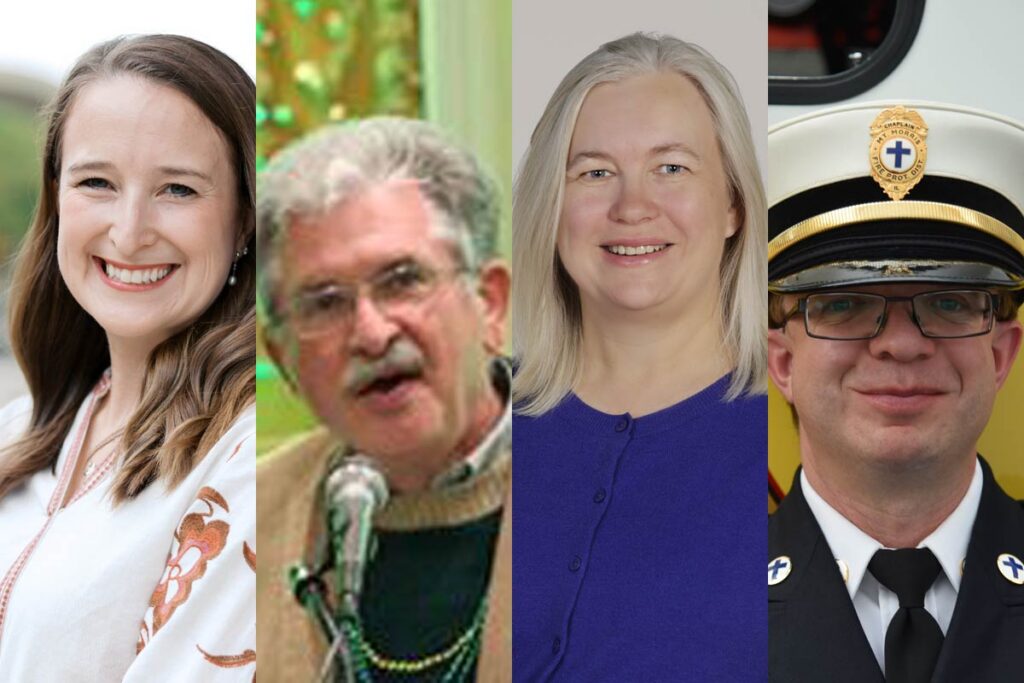
Four LSTC graduates serving as chaplains on learning to listen, earning trust and caring for people through illness and grief.
The man had already told Deacon Lora Salley MAM ’20 that he was ready to die. He was in his late 90s. His wife had died a few years earlier, his health was declining and one of his sons had moved in to care for him. During Salley’s first visit, he spoke about his life and the faith that gave him hope. He could no longer live as independently as he once had.
A couple of weeks later, his son asked Salley to come back. By then, the man was actively transitioning. Salley sat with them while the son, tearful, talked about his favorite memories with his father. They prayed. The man passed later that evening, Salley learned afterward.
There was no need to invent something to say. The father had spoken about what was coming. His son was already confronting one of the most difficult human experiences. He didn’t need someone to change the experience. He needed someone to sit with him as it happened.
“One of the things that I find important is being able to accompany both the patient and the family so that they may not feel so alone,” Salley said.
For four LSTC graduates working in or reflecting on chaplaincy, the question of what spiritual care offers has answers as specific as this visit. A chaplain may help someone talk about death, contact a relative after a fire or listen to a story that a patient needs to tell. The work requires theological education and practical judgment. It also requires the patience to discover what care means to the person receiving it.
Salley found her way into healthcare chaplaincy during her first year at LSTC, through clinical pastoral education at Advocate Illinois Masonic Medical Center. She had a background in social work. In the hospital, she could bring her counseling skills into conversation with what she was learning in seminary, helping patients, relatives and staff through illness and death.
“I learned how helping people connect to their values and beliefs can bring a sense of hope, especially important at times of pain and suffering,” she said.
She completed four units of clinical pastoral education through a chaplain residency. Her Master of Arts in Ministry studies provided theological grounding and preparation in spiritual and pastoral care. As a deacon, she understands chaplaincy as an expression of the call to serve people in places of suffering.
A hospice visit might include prayer, music or memories. It might mean contacting a priest or pastor, explaining signs that death is approaching or reassuring a family about the care they are giving. The conversation can also make room for a patient’s wishes, which loved ones may struggle to ask about.
“I wish more people understood how talking about your wishes for the end of your life is a gift to your loved ones,” Salley said.
Knowing those wishes can reduce the strain on relatives who must make decisions. For patients, speaking openly can bring relief. The subject everyone fears raising may be the one the person who is dying wants to discuss.
The Rev. Kristin Klade MDiv ’15 first encountered hospice through her grandmother Jeanne, who died of liver cancer when Klade was 19. Her grandfather, a physician, had searched for a cure. When he accepted hospice, Jeanne was able to die at home, in her own bed, with him beside her.
Afterward, Klade remembered her grandfather describing how much hospice had helped him. She signed up with a company in her college town as a volunteer friendly visitor. She was studying psychology and considering religious studies. Theology interested her, but she did not necessarily imagine herself preaching or leading a congregation. Meeting the hospice chaplain gave her another way to understand that interest.
Her professional work later included perinatal bereavement care in the Chicago suburbs and a children’s hospital in Fort Worth, her hometown. Eventually, she returned to hospice. The work has brought her into contact with people who believe in God but have no religious community to turn to, including people whose experiences with the church have been painful.
“I feel I am sharing the Gospel through deep listening, witnessing, and validating pain and heartache,” Klade said.
In Fort Worth, many of her patients are Southern Baptist or Roman Catholic. Some know little about Lutheranism. Being a woman chaplain can unsettle their expectations of who will arrive and what that person will say. Sometimes, that unfamiliarity opens a conversation.
A Roman Catholic patient who had not attended Mass in a long time told Klade that he believed women should be ordained. He asked her to promise to officiate his funeral, partly so his family would understand how important women’s equality was to him. His daughter supported the request. Klade prepared a sermon around his favorite scripture and favorite popular song.
The service grew from what she had learned about him. That attention to the individual also guides her work with people whose religious commitments differ from hers. Her interfaith emphasis at LSTC helped prepare her to enter those conversations. She maintains relationships with religious leaders in Fort Worth so she can connect patients with their communities when they wish.
Knowledge of a religious tradition, though, cannot tell her everything about a patient who belongs to it. Klade approaches each person as the authority on how they understand and practice their own faith.
That distinction matters when a terminal diagnosis brings someone’s beliefs into question. A person who has understood faith in transactional terms may struggle to account for an illness that seems unfair. Klade describes the importance of allowing anger and other feelings into the conversation. Sometimes, after listening, she can help someone consider another way of understanding God.
The work asks her to stay with questions before offering a framework for answering them. A patient may need permission to speak honestly before a theological conversation becomes possible. The consequences can reach the relatives who will live with the loss and with whatever they come to believe about it.
Klade also carries parts of seminary life into the visits themselves. Songs she learned in LSTC’s Gospel Choir are songs she now sings to patients and to her children. She credits pastoral care classes, interfaith study and participation in the Center for Christian-Muslim Engagement for Peace and Justice with teaching her to listen with curiosity and to examine her own assumptions. Those habits matter when the person she visits has a different understanding of God, or no interest in religious language at all. Preparation allows her to recognize the difference and to follow the patient’s lead. The relationship begins with what someone is willing to share, and with her willingness to take that account seriously.
For The Rev. John Schumacher MDiv ’78, learning to care for people near death began in parish ministry. His first parish brought encounters with suicide, murder, overdose and unexpected deaths of young people. His second served an older community, and much of his ministry took place in nursing homes, hospitals, funeral homes and parishioners’ homes.
He felt comfortable in those settings and found satisfaction in caring for people with life-limiting illnesses. To test a call to chaplaincy, he resigned from his parish and entered a residency at a level one trauma center. Even at the beginning, he sensed that hospice would be his direction.
Schumacher describes hospice as interdisciplinary care in which everyone attends to the whole person. A chaplain may assess pain. A nursing assistant may sing hymns while bathing a patient. Each professional has particular responsibilities, but patients’ needs do not always respect those divisions.
The chaplain’s visit makes time to learn about a person’s hopes, fears, relationships and beliefs. Storytelling is central to that work.
“Every person has a story which [they long] to tell,” Schumacher said.
At the end of life, telling it can become a way of fitting experiences together, understanding what mattered and seeking peace. The music someone prefers, the art on a bedroom wall, or the language they use all offer ways into that understanding. Relatives and caregivers have stories of their own, before and after a death.
Listening also carries a particular meaning when the listener is a chaplain. Schumacher understands those encounters as occasions in which confession, blessing and the experience of God’s presence may become part of the telling. The chaplain must be willing to hear where a story goes.
His preparation at LSTC included a teaching parish placement at Bethlehem in Chicago’s Beverly neighborhood. Two co-pastors let seminarians see the work of ministry from the inside. He remembers their openness, compassion and humor. A clinical pastoral education placement in pediatrics and pediatric intensive treatment gave him his first professional experience of life-threatening illness and death, along with confidence that he could provide care.
Retirement has not entirely ended his encounters with families he served. People still approach him in public and remind him that he was there when a parent died. They may remember a prayer or the way he acknowledged the death. Sometimes, they tell him how the family has managed since.
The Rev. Josh Ehrler MDiv ’05 works in circumstances where a family may have had no opportunity to prepare for loss. Before becoming a fire chaplain, he was an EMT in the 1990s. His chaplaincy developed after he met a local fire chief who supported creating the role and provided gear and training.
At an emergency scene, Ehrler attends to people directly affected while responders do their work. He may call the Red Cross, locate family or communicate between incident command and those waiting for information. Sometimes he helps someone move away from a medical scene to a place where they can stand or pace.
He keeps water available and asks people to sip it. Questions about a loved one can give a frightened person something to talk about. Explanations of what is happening can make the situation less bewildering. Prayer is infrequent and comes only when requested.
“Mostly, the job is to listen with intent and without judgment, and to remind folks that how they are reacting (and will react days later) is normal,” Ehrler said.
His responsibility extends to the responders. During a call, he watches, listens and distributes supplies. Afterward, he stays through cleanup and the after-action report. Following a particularly difficult event, he may call people individually. Between calls, he attends drills and meetings, joins lunches when possible and teaches mental health classes. He keeps contacts for clinicians and other resources available.
“Establishing trust begins with showing up,” he said.
That trust did not arrive with the title. It took a couple of years before people were willing to talk about much beyond the weather. Curiosity helped. Responders often enjoy discussing the equipment and skills their work requires. Asking them to recount their worst calls, Ehrler cautions, does not serve the same purpose.
He connects his ability to enter unfamiliar situations with the education he received at LSTC. Language study, ethics, preaching and theology helped him develop judgment and a sense of his own limits. Professors who required students to engage people beyond the classroom prepared him to approach different lives with respect.
His community is small enough that recounting a particular emergency could identify those involved. Instead, he describes the circumstances in which he has served: families waiting during an overdose response, people awaiting news from a search, neighbors who escaped a winter house fire with barely enough time to put on socks.
In each setting, someone needs attention while urgent work continues around them. The same need appears in Salley’s visits with caregivers, Klade’s conversations about faith and Schumacher’s accounts of listening at the end of life. Their training gives them ways to respond. The person in front of them determines where they begin. For families, that can mean having someone available whose immediate responsibility is to hear how they feel. Ehrler knows that communicating those realities is paramount for others who work to accompany members of their communities in times of crisis. To that end, he writes at Preaching in the Rurals on Substack and invites you to consider his work there: https://substack.com/@preachingintherurals.
Schumacher’s advice to students is practical: listen to what patients and families say they need, and find colleagues who can support the work. For Ehrler, one response from a person he has accompanied is sufficient: “thank you for being here with me.”