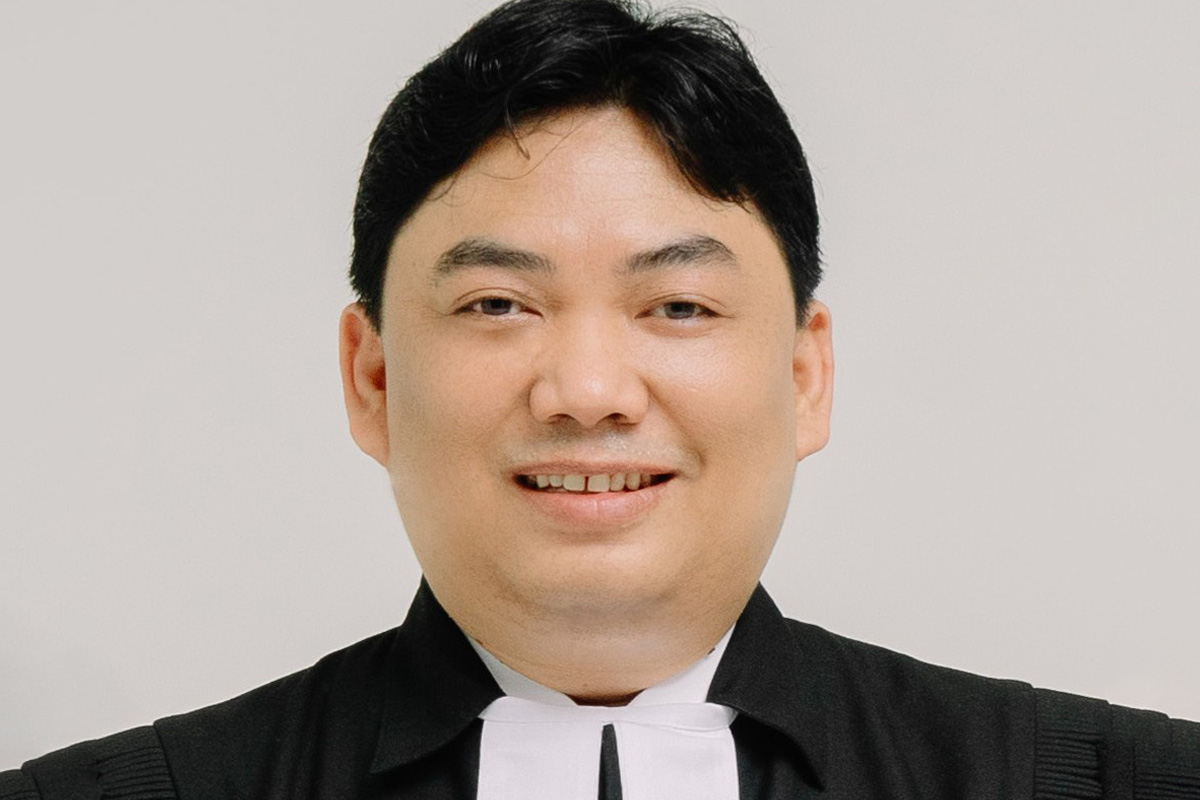
Mangasa Parlindungan
What is your favorite memory of your time at LSTC?
My most memorable memory is participating in an interfaith activity, a discussion with the Muslim community in Washington state. At that time, I had the opportunity and was funded by LSTC, along with other friends from LSTC, to attend the event. My first memory is that we, as LSTC delegates, stayed with families from one of the ELCA churches in the area. Two friends and I were warmly welcomed by the family. Every morning for several days, we had breakfast and discussions to get to know each other. My second memory is the joy of having constructive dialogue with communities of different faiths, especially the Muslim community in Washington.
What was the most meaningful class you took?
The most meaningful class for me was “Grace Incarnate: Lutheran Confessions.” I took this class twice. The first time was for credit, taught by Dr. Kurt Hendel, and the second time as an audit, taught by Dr. Mark Swanson. On another occasion, I also served as a teaching assistant in this class when Dr. Eliseo taught it. Through the “Grace Incarnate” class, I learned about Lutheranism in general and understood Lutheranism in the context of my church, the Batak Church. I also shared about Lutheranism in the context of my church with my classmates. This experience led me to write my dissertation project on Lutheranism in the Indonesian context, specifically the Batak and Nias. As Lutheran churches in Indonesia, the Batak and Nias churches have their own confessions, which contain similarities and differences from the Augsburg Confession.
How did you feel supported during your seminary journey? Were you the recipient of any major scholarships? What communities or people uplifted you during your studies?
Financially, my studies were supported by a full scholarship from the Evangelical Lutheran Church in America through the “International Leader Program.” For this, I am very grateful to the ELCA, especially the staff working in this program: Tammy Jackson, Kaleb Sutherland, Ann Hightower, and Franklin Ishida. At LSTC, I was also supported by the LRWC, a community learning center. Together with friends from various countries, we often shared experiences and supported each other in our studies. I was also supported by excellent learning partners. The Batak and Indonesian communities living in Chicago, New York, Colorado, and California also provided support. Likewise, I was supported by my Indonesian friends studying in the United States, especially in Chicago (the University of Chicago and other campuses in Chicago). We often met and discussed various issues in Indonesia and the world.
What are your post-graduation plans?
One thing is certain: I will return to Indonesia. My church leadership will determine my new ministry. For me, Indonesia offers exciting and unique challenges and opportunities in theology.
How did LSTC shape you as a future leader of the public church?
I believe LSTC is an exceptional campus for shaping and preparing future public church leaders. The campus has both local and international students, enabling us to learn together about contextual issues. The experience of encountering each other on campus will help us minister together in the future in a broader context. Our world needs theologians who can collaborate to bring God’s Kingdom into our lives together.